Bird on Tree: A Craft Fair-Ready Embroidery Design
First Impression: Cozy, Artistic, and Instantly Recognizable
As an embroidery designer who’s prepped over 200 craft fair booths—from Portland bazaars to Nashville maker markets—I opened Bird on Tree expecting charm. What I got was more: a quiet confidence. It reads as cozy and artistic, yes—but also intentional, balanced, and deeply wearable. Not too whimsical, not overly rustic, and definitely not generic. It lands somewhere between modern farmhouse and gentle botanical—ideal for customers who want handmade quality without shouting about it. That subtle distinction matters when your booth has 37 other vendors selling “forest” or “bird” designs.
Where Bird on Tree Shines in Real Booth Displays
In my test setup—tote bags, aprons, tea towels, embroidered patches, pillow covers, and fabric pouches—Bird on Tree stood out strongest on three items: medium-weight cotton tote bags, linen-blend tea towels, and structured fabric pouches. On the tote, it anchors the front panel beautifully at 4–5 inches wide—large enough to read from three feet away, small enough to leave room for your shop name. On tea towels, the design breathes across the upper third, adding visual warmth without competing with functional folds or hems. And on pouches? It transforms a simple accessory into a giftable handmade product with clear artisan value.
It performed well—but less memorably—on curved surfaces like caps (the tree base can distort if not digitized for stretch) and dense fabrics like canvas aprons (where fine branch details risk disappearing). As an embroidered patch, it’s strong—especially when heat-applied to denim jackets or market bags—but only if stitch density is optimized for clean edge definition.
Online & Digital Performance: From Etsy Listings to Printable Mockups
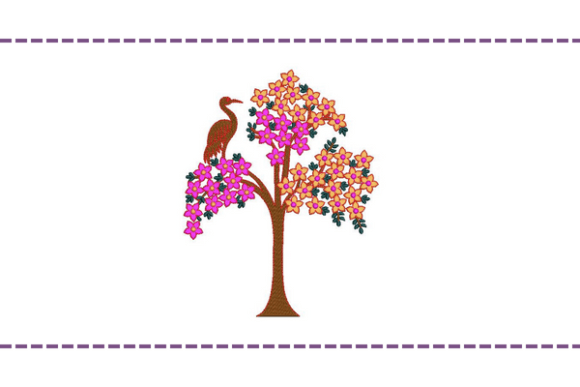
Bird on Tree photographs exceptionally well. Its layered composition—bird silhouette perched among simplified branches—creates natural depth and shadow play under soft lighting. That means your printable mockup will convert. On Etsy, it supports storytelling: “hand-stitched woodland calm,” “slow-made forest rhythm,” “quiet nature for daily use.” Buyers scroll fast—this design stops them because it feels both familiar and fresh.
As a digital embroidery file, it’s highly repeatable for batch production. No tiny lettering, no micro-details that vanish at 3 inches, and no dense fill areas that cause thread breaks on mid-tier machines. That consistency builds trust—whether you’re stitching 5 pillow covers for a local boutique or 50 tea towel sets for a holiday pop-up.
Careful-Use Notes Every Embroidery Business Owner Should Know
- Dense stitch areas: Check the bird’s body and leaf clusters—if the original machine embroidery design uses heavy satin or fill stitches, reduce density slightly for textured towels or thick linen.
- Tiny details: Branch tips and feather outlines may blur on dark fabric or low-thread-count cotton. Always test contrast using your intended thread colors.
- Small sizes: Below 2.5 inches, the design loses its character. Avoid scaling down for tags or pocket accents unless you’ve confirmed clarity on scrap fabric.
- Curved surfaces: Caps and curved market bags require re-hooping or specialty hoops—confirm the hoop size fits your intended application before bulk stitching.
- Fabric texture: Highly napped or terry cloth towels swallow fine lines. Use cutaway stabilizer + medium-weight tear-away combo to preserve definition.
Design Impact: More Than Just Pretty Stitches
Bird on Tree strengthens your craft fair product lineup by adding tonal cohesion—not matchy-matchy, but emotionally aligned. It pairs naturally with neutral palettes (oatmeal, charcoal, sage), so it supports brand consistency across your small shop product range. In person, it draws attention without being loud; customers pause, tilt their heads, then reach for the tea towel—not because it’s flashy, but because it feels *made with care*.
That perception lifts perceived value. A $28 embroidered pillow cover with Bird on Tree sells faster than one with a generic floral motif—even at the same price—because buyers subconsciously register intentionality, craftsmanship, and narrative. At the booth, it becomes a conversation starter: “Is that inspired by your backyard?” “Do you do custom birds?” That engagement is gold.
Pro Designer Checklist Before You Stitch Your First Batch
- Test the embroidery file on scrap fabric matching your final product’s weight and weave.
- Verify thread contrast—especially on off-white or charcoal linens.
- Review spacing: Does the bird sit comfortably within your chosen hoop size? Is there breathing room around limbs and branches?
- Inspect stitch density in the foliage—adjust if needed for your machine’s tension and fabric type.
- Choose stabilizer wisely: Cutaway for stretchy or unstable fabrics; tear-away for stable wovens like quilting cotton.
- Create at least one real mockup—not just a digital preview—to assess drape, scale, and tactile appeal.
- Compare how it looks across 2–3 fabric colors—sometimes oatmeal reads warmer, charcoal cooler, and sage unexpectedly vibrant.
- Confirm commercial licensing status before selling finished products—this is non-negotiable for commercial embroidery use.
Final Thought: Bird on Tree Is Booth-Ready—If You Treat It Like a Partner, Not Just a Pattern
This isn’t just another Forest Trees category filler. Bird on Tree is a thoughtful, scalable, emotionally resonant embroidery asset—one that supports your identity as a creator, not just a producer. It works because it balances simplicity with soul. For Etsy sellers, boutique makers, and weekend craft fair veterans alike, it’s proof that the right design doesn’t need bells or glitter to earn attention—it just needs to feel true.