Decorated Bear: A Woodland Charm for Small Business Merch
First Impression: Friendly, Handmade, and Professionally Approachable
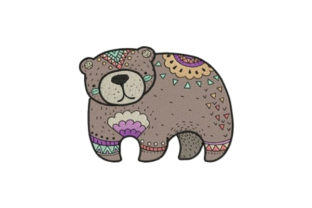
As an embroidery designer who’s developed hundreds of commercial designs for cafés, boutiques, florists, and pet brands, my first read on Decorated Bear is immediate and intuitive: this isn’t just a cute woodland animal—it’s a brand-ready emblem. The name itself signals warmth and intentionality—“decorated” implies thoughtful detail, not generic cuteness; “bear” grounds it in the Woodland Animals category with natural appeal and broad audience resonance. It feels handmade without sacrificing polish—ideal for small businesses that want authenticity *and* professionalism in their custom apparel and embroidered patch offerings.
Real-World Performance Across Business Touchpoints
Decorated Bear shines where small businesses need consistent, scalable identity: as a chest logo on staff aprons, a subtle sleeve accent on barista uniforms, or a bold front-cap design for a local bakery’s seasonal merch drop. Its balanced proportions and clear silhouette translate beautifully onto tote bags—especially when paired with minimalist typography—and hold up well as a woven or embroidered label on handmade product packaging. For Etsy sellers and craft studios, it adds instant charm to customer thank-you gifts (think: embroidered tea towels or canvas market bags) without overwhelming the item’s function.
In uniform applications—like café aprons or florist smocks—Decorated Bear reads clearly at 3–4 inches wide, reinforcing team cohesion while feeling personal, not corporate. As a cap embroidery piece, it avoids excessive stitch density in key areas (no tiny facial features or micro-outlines), which reduces puckering risk on curved fronts. On textured fabrics like canvas tote bags or linen napkins, its clean outer shape and moderate interior detail allow stabilizer to do its job without overloading the needle path.
Where to Use Decorated Bear Thoughtfully
While versatile, Decorated Bear requires smart placement decisions. Avoid shrinking it below 2 inches for patches—fine decorative elements may blur or lose definition, especially on twill or denim. On dark uniforms, verify thread color contrast: light tan or cream threads can fade visually unless paired with a rich brown or charcoal outline. Curved surfaces (like cap fronts or curved pocket flaps) benefit from a simplified version—consider trimming non-essential interior details if your digitizer recommends it.
High-wear items—think daily-use aprons or reusable grocery totes—demand attention to stitch density. If the original machine embroidery design includes dense fill areas (e.g., shaded fur texture), confirm it’s optimized for durability. Overly dense stitching can stiffen fabric and break down faster in wash cycles. Likewise, avoid placing Decorated Bear directly over seams or high-flex zones (elbows, waistbands) unless tested on real fabric with proper stabilizer.
Brand Identity Impact: More Than Just Cuteness
For small businesses, every embroidered element shapes perception—and Decorated Bear strengthens trust through consistency and care. Unlike clip-art animals, its “decorated” quality suggests craftsmanship, aligning naturally with handmade product values. Customers subconsciously associate thoughtful design with attentive service—whether it’s a bear stitched on a florist’s delivery bag or a pet brand’s bandana tag. That visual continuity across uniforms, packaging, and merch builds recognition faster than logos alone.
It also elevates perceived product value. A simple cotton tote becomes a branded keepsake when anchored by a confident, well-executed embroidered patch. For Etsy sellers, Decorated Bear serves dual roles: as a recognizable signature mark *and* a subtle storytelling device—evoking nature, comfort, and local charm without words. When used alongside other design assets, it holds its own without competing, making it ideal for cohesive visual systems.
Practical Embroidery Designer Notes for Commercial Use
Before cutting fabric or sending files to production, run these checks:
- Test in black and white first—verify contrast and clarity without color distraction.
- Confirm small-patch viability: resize to your target patch dimensions (e.g., 1.75" x 1.5") and inspect spacing between elements—tight loops or narrow gaps may collapse.
- Review thread color recommendations: match base fabric tone and consider how colors shift under lighting (e.g., gold thread on beige canvas vs. navy twill).
- Inspect spacing and underlay: look for floating stitches or weak anchor points—critical for high-wash items like aprons.
- Verify hoop size compatibility: ensure your standard hoops (e.g., 4x4", 5x7") accommodate the full design without re-hooping mid-stitch.
- Test on real fabric + stabilizer: run a sample on your most common substrate (e.g., medium-weight cotton drill or poly-cotton blend) using your go-to cutaway or tear-away stabilizer.
- Create a printable mockup for client approval—show Decorated Bear on actual garment flats, not just isolated PNGs.
- Compare beside existing design assets: does it share weight, style rhythm, and proportion with your current logo or typography?
- Confirm commercial licensing: since this is a digital embroidery file, ensure your purchase grants rights for resale, branded merchandise, and commercial embroidery use—don’t assume.
Remember: even a charming design like Decorated Bear only delivers business value when executed with intention. It’s not just about stitching—it’s about reinforcing what your brand stands for, every time a customer sees it on a cap, tote, or apron. Used wisely, it becomes quiet confidence in thread form.