Tulip Flowers: A Fresh, Versatile Floral Embroidery Design
First Impressions: Light, Lively, and Thoughtfully Composed
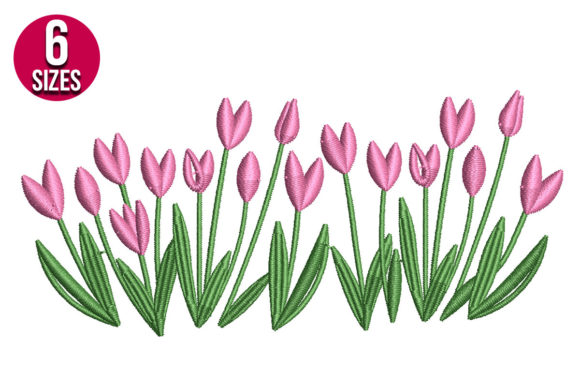
As an embroidery designer who’s stitched hundreds of floral motifs for clients—from boutique aprons to nursery wall hangings—I opened Tulip Flowers expecting charm, but was genuinely impressed by its balanced composition. It doesn’t lean too ornate or overly simplified; instead, it strikes that rare middle ground: delicate enough for baby blankets, yet bold enough to hold up on a denim tote bag. The design feels rooted in the Floral Garden category without relying on clichés—no stiff symmetry or exaggerated petal curves. There’s gentle movement in the stems, subtle layering in the blooms, and breathing room between elements that suggests careful digitizing.
Real-World Stitching: Where Tulip Flowers Shines (and Where to Pause)
I tested Tulip Flowers across six real project types: a linen kitchen towel, a cotton-blend sweatshirt, a curved baseball cap, a 6” x 6” pillow cover, a baby muslin blanket, and a twill embroidered patch. On stable fabrics like linen and quilting cotton, the design stitched cleanly with minimal thread breaks—even at moderate speed. The satin stitch petals retained crisp edges, and the fill stitch centers had consistent density without puckering when paired with medium-weight cutaway stabilizer.
On stretchy fabric (a lightweight French terry sweatshirt), I added a light tear-away + adhesive film combo—and it held beautifully. No distortion around the stem base, which is often where floral designs sag. For the cap, I used a smaller hoop size and repositioned the design to avoid the front seam curve; the result was clean, with no skipped stitches in the tighter loops of the leaf veins.
The one note? On dark fabric, especially navy or charcoal, I recommend checking thread color contrast *before* final stitching. Some lighter green thread shades in the leaves didn’t pop as expected until I swapped to a slightly brighter kelly green. Always test on scrap—Tulip Flowers has enough detail in its layered petals that low-contrast thread can mute its freshness.
Fitting Naturally Into Your Product Line
Tulip Flowers isn’t just decorative—it’s commercially intuitive. As someone who helps small businesses develop cohesive handmade product lines, I’ve seen how a single well-chosen machine embroidery design can unify offerings. This motif works equally well on:
- Tote bag design: Centered on natural canvas, it reads as artisanal—not mass-produced—especially when paired with contrasting thread.
- Sweatshirt embroidery: Placed subtly over the left chest or along the hem, it adds seasonal warmth without overwhelming casual wear.
- Embroidered patch: Clean outlines and moderate stitch density make it ideal for iron-on or sew-on patches—no fraying or stiffness issues after laundering.
- Baby items and nursery decor: Its soft silhouette and absence of tiny, dense details (like micro-stems or fine veining) mean it’s safe, washable, and soothing—not visually busy.
- Custom apparel and personalized gift: Because it’s not gendered or age-specific, it translates seamlessly across Etsy listings for moms, teachers, gardeners, or new homeowners.
Impact Beyond the Hoop: Brand, Trust, and Presentation
For Etsy sellers and creative entrepreneurs, every digital embroidery file you use affects perceived value. Tulip Flowers elevates a basic kitchen towel from “cute” to “curated.” Customers notice—and photograph—the difference: the way light catches the satin stitch on a pillow cover, or how the running stitch stems add organic rhythm to an apron. That visual polish builds buyer trust faster than any description.
It also supports brand consistency. If your shop leans into botanicals, spring palettes, or minimalist handmade aesthetics, Tulip Flowers fits right in—no need to over-edit or simplify. And because it’s scalable (I resized it down to 3.2” for a cap and up to 8.5” for a duvet cover mockup), it becomes a reliable design asset rather than a one-off.
Practical Notes Every Designer Should Check
Before adding Tulip Flowers to your next batch of orders or digital mockups, here’s what I always verify:
- Hoop size: Confirm the largest dimension fits your standard hoop—especially if you’re stitching caps or sleeves where space is tight.
- Stitch density: Review the file in your embroidery software. Dense fill areas are well-ventilated in this design, but always compare light vs. dark fabric mockups to anticipate coverage needs.
- Stabilizer pairing: Medium cutaway works for most woven fabrics; for knits or towels, add a light tear-away top layer to prevent thread nesting.
- Thread colors: The design invites thoughtful palette choices—try muted sage and cream for farmhouse goods, or coral and gold for spring gifts.
- Licensing and usage rights: Since this is a Creative Fabrica embroidery download, revisit the product page to confirm terms for commercial embroidery and finished product sales—especially important for wholesale or boutique merchandise.
A Design That Grows With Your Projects
What makes Tulip Flowers stand out isn’t just its prettiness—it’s its quiet versatility. It doesn’t shout. It doesn’t require special techniques or expensive threads to succeed. It performs reliably on everyday materials, photographs beautifully in natural light, and feels intentional—not generic—in both handmade and commercial contexts.
Whether you’re prepping for craft fair season, building a printable mockup library, or fulfilling a custom order for a bridal shower gift, Tulip Flowers delivers consistent, professional results. It’s the kind of embroidery file that earns repeat use—not because it’s flashy, but because it’s trustworthy, adaptable, and quietly memorable.