Cat Paw Print: A Smart Embroidery Choice for Small Business Brands
First Impression: Friendly, Approachable, and Professionally Playful
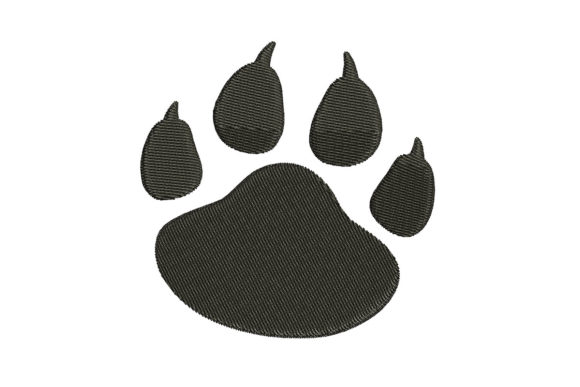
As an embroidery designer who’s developed hundreds of commercial designs for cafés, boutiques, pet brands, and handmade studios, my first read on Cat Paw Print is immediate and positive: it reads as warm, intentional, and authentically small-business-friendly. It doesn’t try to be overly complex or “cute overload”—instead, it lands in that sweet spot between handmade charm and polished professionalism. That balance is rare—and critical—when your embroidered patch or chest logo represents your brand daily on staff aprons, tote bags, or product tags.
Real-World Business Use: Where Cat Paw Print Shines
Cat Paw Print isn’t just a decorative motif—it’s a versatile brand accent with strong functional potential. Here’s how it performs across common small business applications:
- Embroidered patches: Clean outline and open negative space make it ideal for 2”–3” woven or chenille patches—especially for pet shops, indie bakeries with cat-themed branding, or florists using feline motifs in their visual language.
- Staff uniforms & aprons: At 1.5”–2”, it works beautifully on left-chest placement—subtle enough not to compete with a main logo, but distinctive enough to reinforce brand personality.
- Cap embroidery: When scaled to 1.75” wide (standard front cap size), the rounded shape flows naturally across curved surfaces—no distortion if digitized well and hooped correctly.
- Tote bag design & custom apparel: Paired with minimalist typography (“Brew & Purr Café” or “The Whisker Co.”), Cat Paw Print adds instant recognition without cluttering the layout.
- Product packaging accents & customer gifts: Think stitched tags on ceramic mugs, linen napkins, or gift boxes—small, tactile, and memorable.
- Etsy branding & craft business assets: As part of a cohesive set—including matching thread palettes and printable mockups—it strengthens visual consistency across digital listings and physical goods.
Where to Use Cat Paw Print With Intention—Not Assumption
Not every surface or scale suits every design—even a simple one like Cat Paw Print. As a working embroidery designer, I advise caution in these scenarios:
- Patches under 1.25”: Fine inner curves may lose definition. Always test stitch at final size before bulk production.
- Cap fronts on structured cotton twill: High stitch density near the toe pads can cause puckering—confirm stabilizer type (cutaway + tear-away combo often works best).
- Dark uniforms or textured fabric (like heavy canvas or terry cloth): Contrast matters. Test thread colors—navy on black won’t read; ecru or light gray on charcoal often does.
- Frequently washed items (e.g., café aprons, kids’ pajamas): Avoid ultra-fine outlines or isolated satin-stitched areas unless the digitizing includes proper underlay and lock stitches.
- Branded product labels where legibility = trust: If used alongside text (e.g., “Handmade in Portland”), ensure spacing between paw and type is generous—tight kerning undermines professionalism.
Brand Identity Impact: More Than Just a Cute Detail
For small businesses, every stitch contributes to perception. Cat Paw Print subtly signals approachability, care, and attention to detail—qualities customers associate with handmade products and local service. When repeated across aprons, tote bags, and packaging, it builds visual rhythm and recognition. Unlike generic clipart, a well-executed machine embroidery design like this one elevates perceived value: customers assume higher craftsmanship, better materials, and thoughtful branding—even before reading your story.
It also supports authenticity. A florist using Cat Paw Print on seed packet tags or a cat café embroidering it onto barista sleeves doesn’t feel forced—it feels aligned. That alignment builds trust faster than any slogan.
Practical Designer Notes Before You Stitch
Before adding Cat Paw Print to your next client project or shop inventory, run through these checkpoints:
- Test in black and white first: Remove color bias—does the shape hold up? Are inner curves legible?
- Check small-patch viability: Resize to 1.25” and zoom in. Do stitch angles stay clean? Is there unnecessary density?
- Review thread color contrast: Especially on dark or busy fabrics. Light neutrals (oatmeal, heather grey) often outperform bright pastels for longevity.
- Inspect spacing & proportions: Does the paw sit balanced within its bounding box? Will it align cleanly beside your business name or other design assets?
- Confirm hoop size compatibility: Standard 4x4” hoops handle most versions—but verify before loading into your commercial embroidery machine.
- Test on real fabric: Run a sample on your go-to apron cotton or tote canvas—not just stabilizer swatches.
- Use appropriate stabilizer: Lightweight cutaway for knits; medium-weight for stable wovens; fusible + tear-away for caps.
- Create a printable mockup: Show clients exactly how Cat Paw Print will appear on finished merch—context builds confidence and reduces revision rounds.
- Compare beside existing assets: Does it harmonize with your current logo, font system, and color palette—or clash silently?
- Verify commercial licensing: Since this is intended for small business merch, custom apparel, and commercial embroidery, confirm the digital embroidery file grants full usage rights—not just personal craft use.
Final Thought: A Small Mark With Big Brand Potential
Cat Paw Print is more than a charming motif—it’s a strategic, scalable asset for small businesses building identity through tactile, repeatable details. Whether stitched on a barista’s sleeve, heat-pressed onto a reusable shopping bag, or embroidered as a limited-run patch for a local pet adoption event, it carries warmth, consistency, and quiet professionalism. For embroidery shops, Etsy sellers, and product designers alike: when sourced and applied intentionally, this embroidery file delivers measurable value—not just visual appeal.